Introducing The Quantum Infrastructure Cloud Learn more

Investor Relations

An operating system for governed quantum infrastructure

SoftQuantus builds across three markets: QCOS for quantum, SynapseX for AI and QuantumLock for post-quantum cryptography. Each claim on this page points to something you can check.

  • Patent pending

    French patent application FR2513440

  • 180,000

    GPU-hours, EuroHPC AI Factory Large Scale allocation EHPC-AIF-2025LS13-019 on LUMI-G

  • ≤ 24 qubits

    CPU state-vector simulation through QCOS, with an evidence bundle per run

  • PyPI

    Public packages: softqcos, quantumlock and softquantus-verify

Why SoftQuantus

Quantum computing, AI and the move to post-quantum cryptography are arriving at the same organisations at the same time. Each one raises the same question: what ran, and can it be shown?

  • A governed execution gap

    Quantum backends differ in runtimes, and there is no common record of what ran and how. QCOS gives each run an evidence bundle with SHA-256 hashes that can be checked offline.

  • Measured, not promised

    We withdrew our only optimiser benchmark (GHZ-6) in August 2026 when review found its setup favoured the optimiser. Anything we cannot show yet is labelled on the roadmap.

  • A record is hard to replace

    Post-quantum migration now has public dates in the EU and the US. Organisations need an inventory and a record of what they run, and a record that sits inside a workflow becomes part of how they work.

  • European position

    An Estonian legal entity with a EuroHPC AI Factory Large Scale allocation and membership of Microsoft for Startups.

One company, three markets

Three product lines, one commercial platform at platform.softquantus.com for licences, credits and invoices, and one compute service behind them.

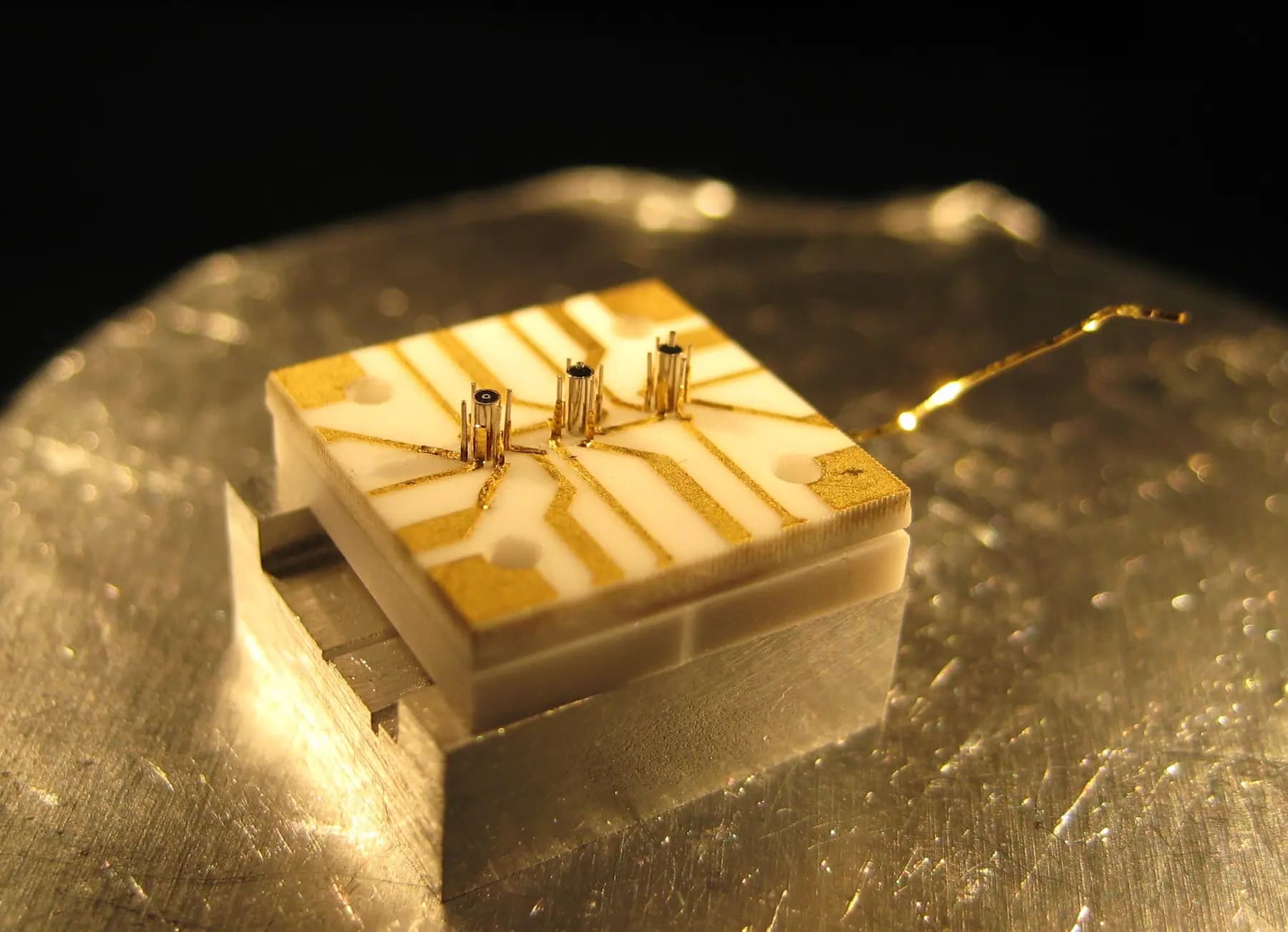
Gold ion trap chip on a dark background

Quantum

QCOS, the layer between people and quantum computers

QCOS governs quantum work from a REST API, a Python SDK, a CLI and an MCP server. Compute is reached through Softquantus Cloud, and each run states in its evidence bundle how the result was produced.

  • Evidence bundle per run, with execution_mode on the record
  • Vendor-neutral: QCOS provides no computer of its own
  • Patent pending — French patent application FR2513440
About QCOS
Rows of supercomputer cabinets

AI

SynapseX, language models sold by API

SynapseX sells language models through the SynapseX LLM Console. SynapseX Chat consumes those services and is the home of the Lab ecosystem for scientific work.

  • 180,000 GPU-hours on LUMI-G allocated for model training
  • Chat and Desktop are live, mobile apps are in progress
  • Model claims appear only after they are measured
About SynapseX
Render of a q-ary lattice, the structure behind ML-DSA

Post-quantum cryptography

QuantumLock, keys, licences and signing

QuantumLock manages keys, hardware-bound licences and signing. ML-DSA-65 is available through liboqs and is not CAVP-validated. Six policy packs evaluate a cryptographic inventory against published themes.

  • Policy packs evaluate. They do not certify compliance
  • Licence tokens validate offline
  • Sold and checked through the Softquantus Research Platform
About QuantumLock

Why now

Two public timelines are running at once: capital is moving into quantum computing, and governments have put dates on the move away from quantum-vulnerable cryptography.

  • $2.7 trillion

    Economic value quantum computing could create worldwide by 2035

  • $12.6 billion

    Invested in quantum technology start-ups in 2025, 6.3 times the 2024 total

  • $1 billion+

    Quantum computing company revenue in 2025, and as much as $4.4 billion by 2028

Source: McKinsey Quantum Technology Monitor 2026, April 2026. Third-party estimates about the sector, not SoftQuantus figures.

Post-quantum migration dates

  1. 31 Dec 2026EUMember States implement first steps, set national roadmaps and start planning and pilots for high- and medium-risk use cases.
  2. After 2030NISTQuantum-vulnerable public-key cryptography is deprecated.
  3. 31 Dec 2030EUHigh-risk use cases complete their transition. Quantum-safe upgrades are enabled by default in software and firmware.
  4. After 2035NISTIts use is disallowed under NIST standards and guidelines.
  5. 31 Dec 2035EUMedium-risk use cases complete, and low-risk ones as far as feasible.

Sources: NIS Cooperation Group roadmap, June 2025, and NIST IR 8547, October 2026. Public context only. QuantumLock does not certify compliance with either document.

What you can check

SoftQuantus is an early-stage, founder-led company. Customer, revenue and funding figures are not published here. We share them directly with investors on request.

What is public is listed here, each with the place to confirm it.

  • The software is public

    On PyPI: softqcos, quantumlock and softquantus-verify.

  • A report can be checked without us

    softquantus-verify recomputes the SHA-256 content and evidence hashes offline, and checks an Ed25519 signature when a key is supplied.

  • Published runs stay open to inspection

    Every run we publish appears on the sealed runs page, which says so plainly when there is none to show.

  • We withdraw what does not hold

    Internal review on 25 August 2026 found the GHZ-6 benchmark setup favoured the optimiser. The result is no longer cited.

  • The compute allocation is on record

    EuroHPC AI Factory Large Scale allocation EHPC-AIF-2025LS13-019: 180,000 GPU-hours on LUMI-G.

  • The company is registered

    SoftQuantus innovative OÜ, register code 17048927, Estonian e-Business Register.

Programmes

  • EuroHPC Joint Undertaking

    AI Factory Large Scale allocation EHPC-AIF-2025LS13-019: 180,000 GPU-hours on LUMI-G.

  • Microsoft for Startups

    Member of Microsoft for Startups.

  • Horizon Europe / EIC

    A funding pathway we apply to for QCOS development. It is not a partnership, and no funding figures are published on this page.

Corporate information

Legal entity

  • SoftQuantus innovative OÜ
  • Registry: 17048927
  • Tallinn, Estonia (EU)

Jurisdiction

  • European Union
  • Estonian entity (OÜ)
  • Built to GDPR requirements

Sector

  • Enterprise software and deep tech
  • Quantum computing middleware
  • Post-quantum cybersecurity
  • AI language models

Get in touch

Request the investor deck, ask questions about the technology or the EIC funding pathway, or schedule a call with the founding team.

Entity
SoftQuantus innovative OÜ — Tallinn, Estonia

Messages are delivered to info@softquantus.com. We typically respond within 2 business days.

This page is for informational purposes only and does not constitute an offer to sell or a solicitation of an offer to buy any securities. SoftQuantus innovative OÜ, Tallinn, Estonia — Registry 17048927. QCOS and QuantumLock are product names of SoftQuantus.

Film, built from cropped and re-graded photographs: NIST (public domain) and OLCF at ORNL (CC BY 2.0), via Wikimedia Commons. Photographs, cropped and recompressed: NIST (public domain) and OLCF at ORNL (CC BY 2.0). Lattice images are SoftQuantus renders. None shows SoftQuantus hardware, and no partnership or endorsement is implied.